
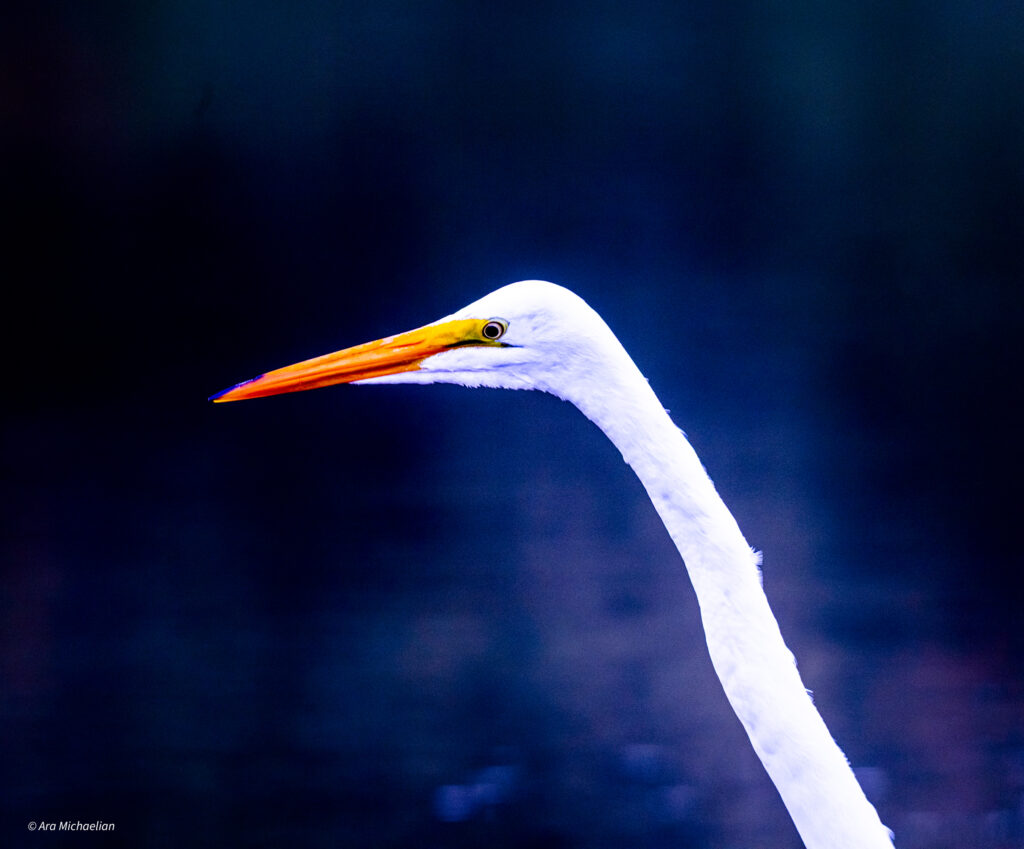
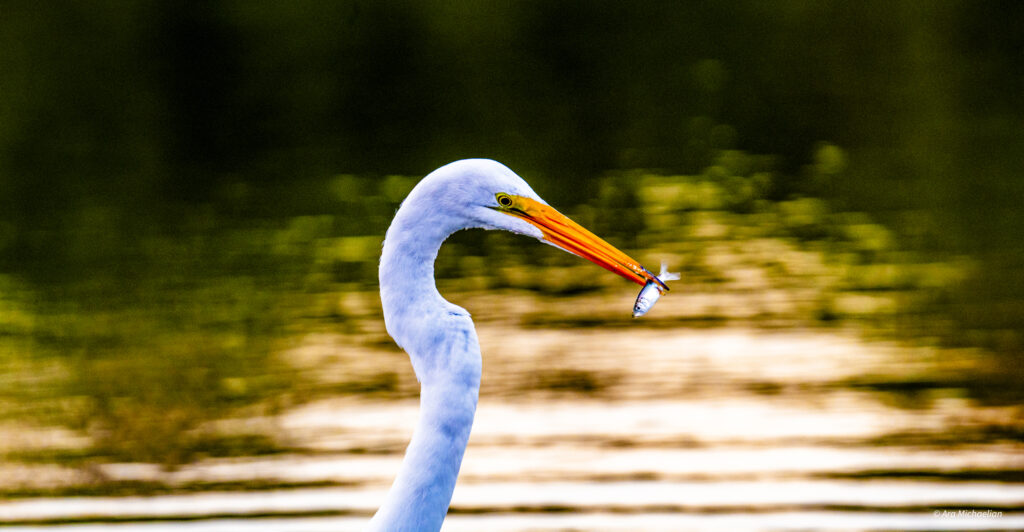
The Snowy Egret was standing patiently in the middle of two derange pipes, that were connecting the Belmont Slough Nature Reserve to a fairly large transitional pool. On the hi tides, the water would flow out from the opposite end of the pool into narrower channels of Redwood Shores, and eventually into San Francisco Bay. But on the low tides, there would always be water as well since nothing was coming in and nothing was going out.
So the local birds like Snowy Egret, Great Blue Heron and countless others, have learned that there’s always food in that pond and at dinner time it becomes a popular hangout for them. And for the migratory Arctic Terns, that’s their way of life and they learn quickly. They migrating from Arctic to Antarctica and back every year hugging the coastline vs strait line, to feed, rest, and evidently with this group that I’ve photographed, build nests and raise young before continuing their rout.
The Arctic Tern’s migration is the longest of any animal on Earth, with some individuals traveling over 50,000 miles round trip annually.
The collecting pond is about ten feet or so blow the Belmont Slough level, with steep levy walls that was covered with thick bushes over coarse wood chips and fairly large size rocks. I bike to this location using the path alongside of Belmont Slough, leave my bike under a bush at the top of the path, skid and try not to stumble all the way down to water’s edge. Then I find a suitable small patch of grass and sort of recline on my backpack to slightly sit up for Heron and Egret shots. For the Arctic Terns, I used it as a pillow to lay down to photograph them while they’re hovering overhead looking for sushi dinner.
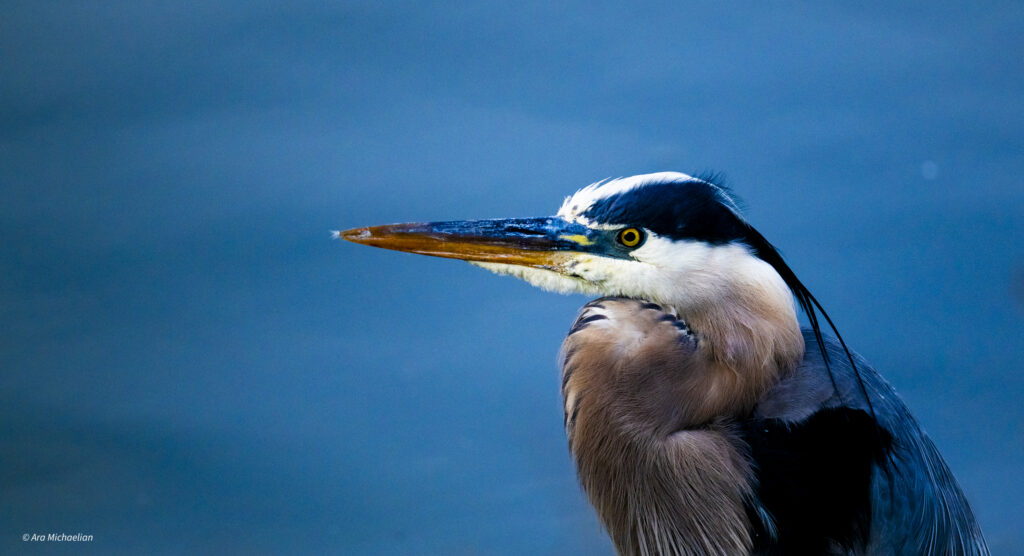
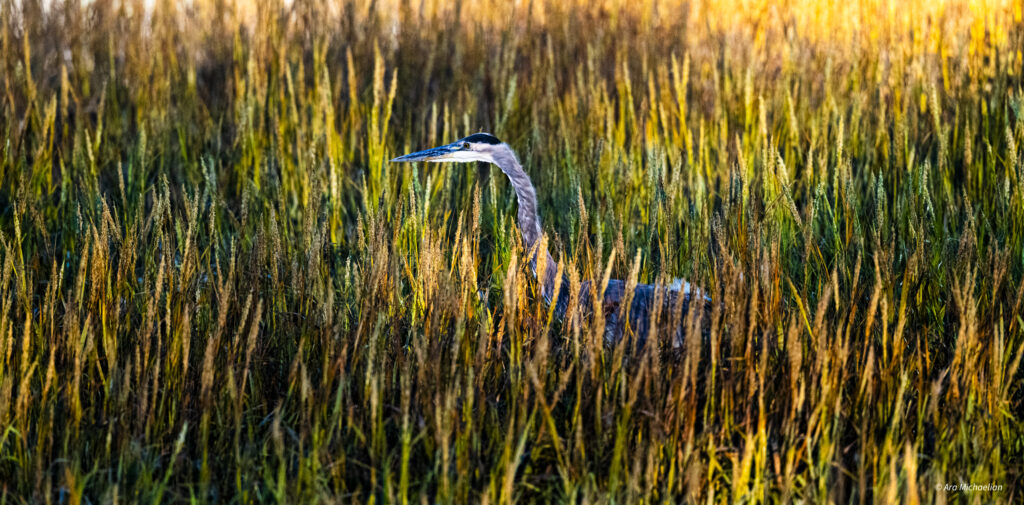
I would station myself about ten feet or so to the right of the drainage pipes, where the water would circulate and slowly spread out to the rest of the pond. If there was a Heron standing knee deep in that prime fishing spot, the Egrets wouldn’t land near him, but if they were brave enough to land nearby, they would be chased away immediately by the much larger Great Blue Heron.
The Great Blue Heron and the Snowy Egret would stand still for few minutes straight, with only their eyes moving and scanning slightly below the surface of the water that was within their striking distance. If no luck, they would take a slow motion step for a better spot. I had seen this Heron before, the bare spot on top of its right shoulder was much larger, seemingly result of a coyote attack that it escaped mostly unharmed.
But the main attraction in my mind was, to capture the Arctic Terns that most of the times were hovering over my head and sometimes diving in hopes of taking the last catch of the evening to their hungrily and begging chicks few hundred feet away, on higher grounds. They would be huddled together under their mom’s down feathers waiting for dinner to arrive… not a bad life so far. Until, they had to become world class flyers like their parents, and migrate in few months, with them.
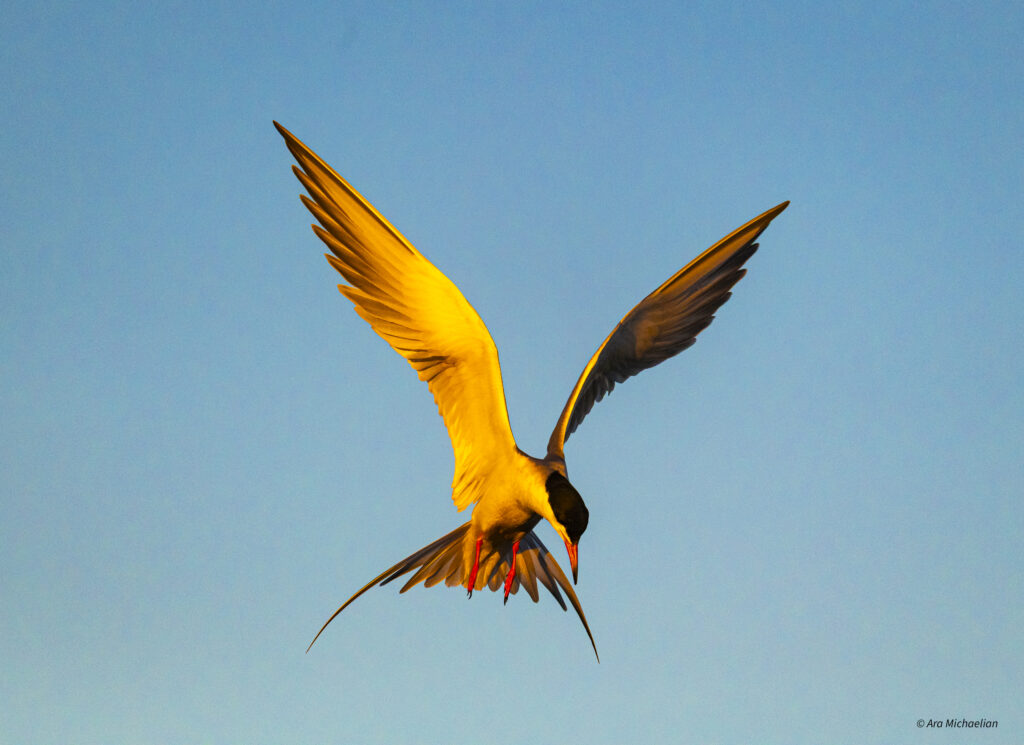
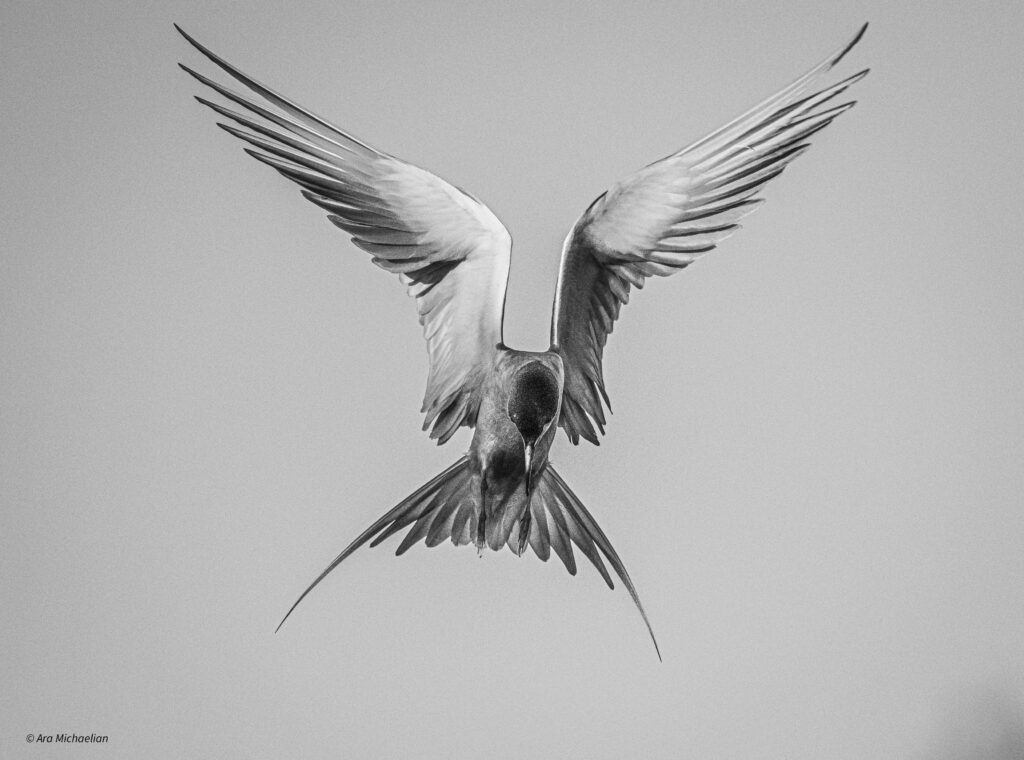
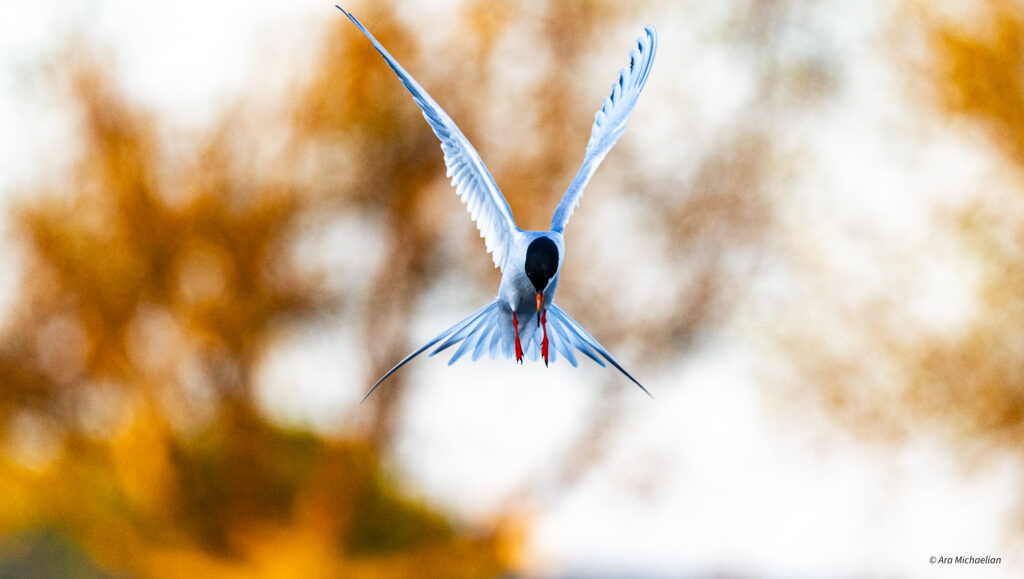
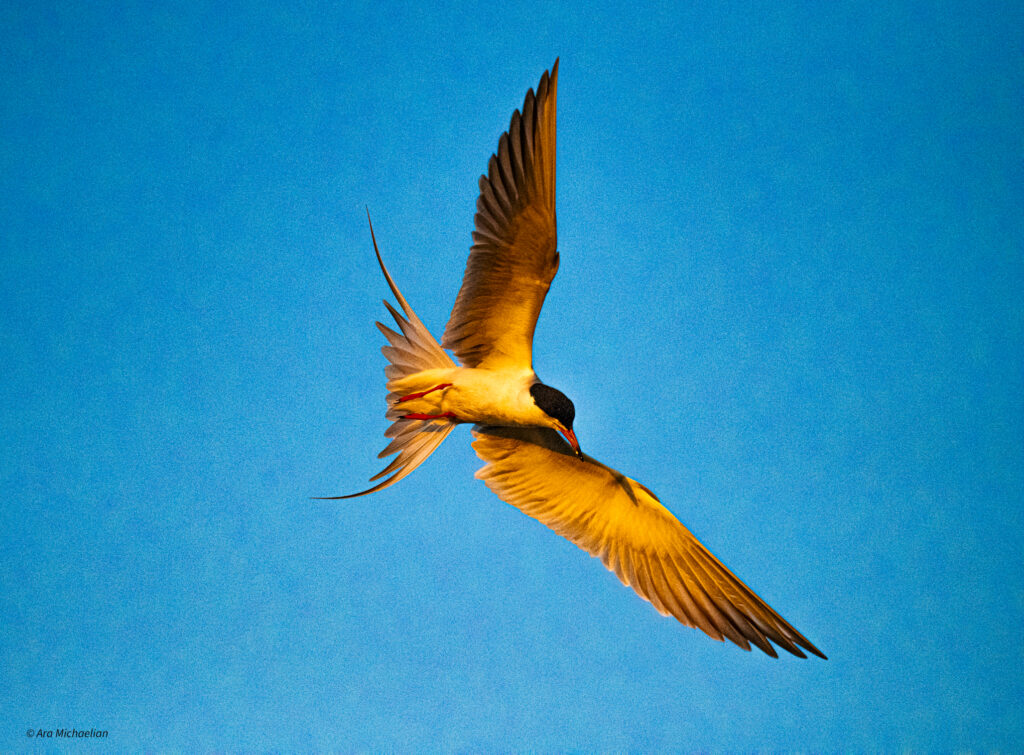
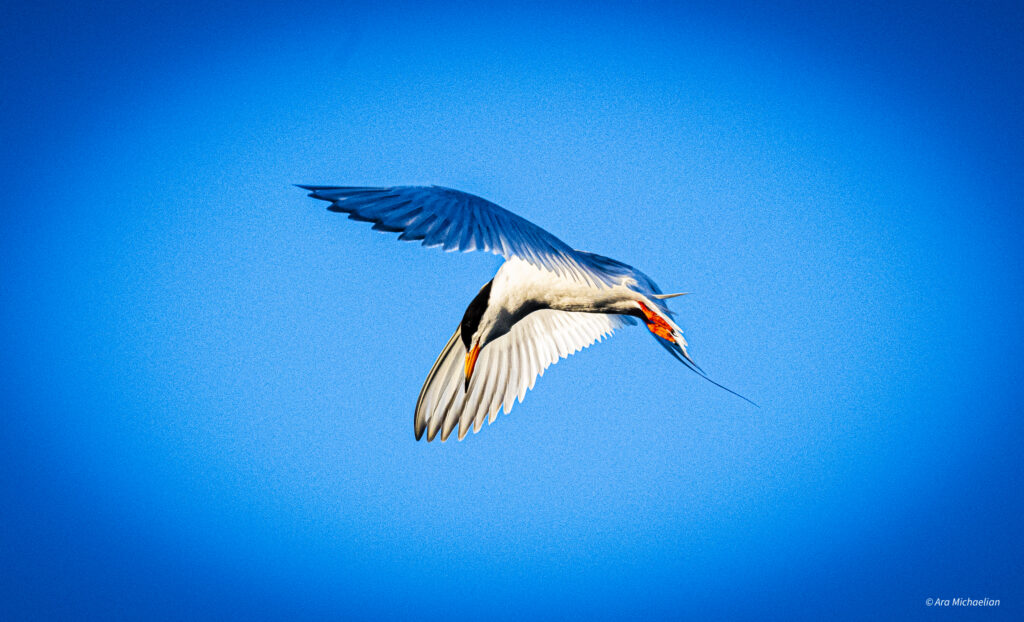
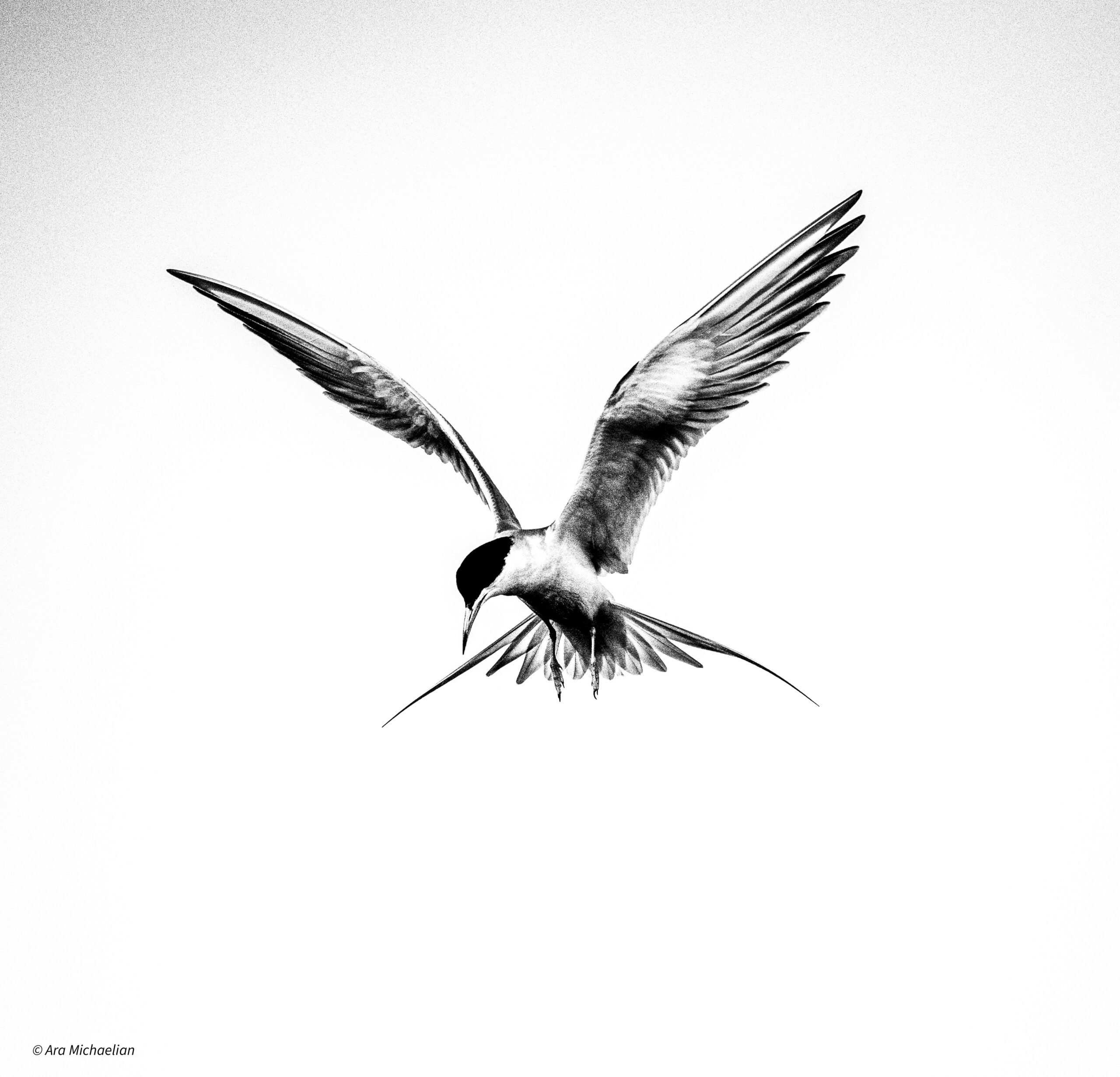
Photographing Arctic Terns, had become by far the most exhilarating experience every time I went out to visit them. I wanted to capture their astonishingly elegant yet powerful “poses”, when they were in the final stages of preparing to dive… which meant the heart pounding moments for me.
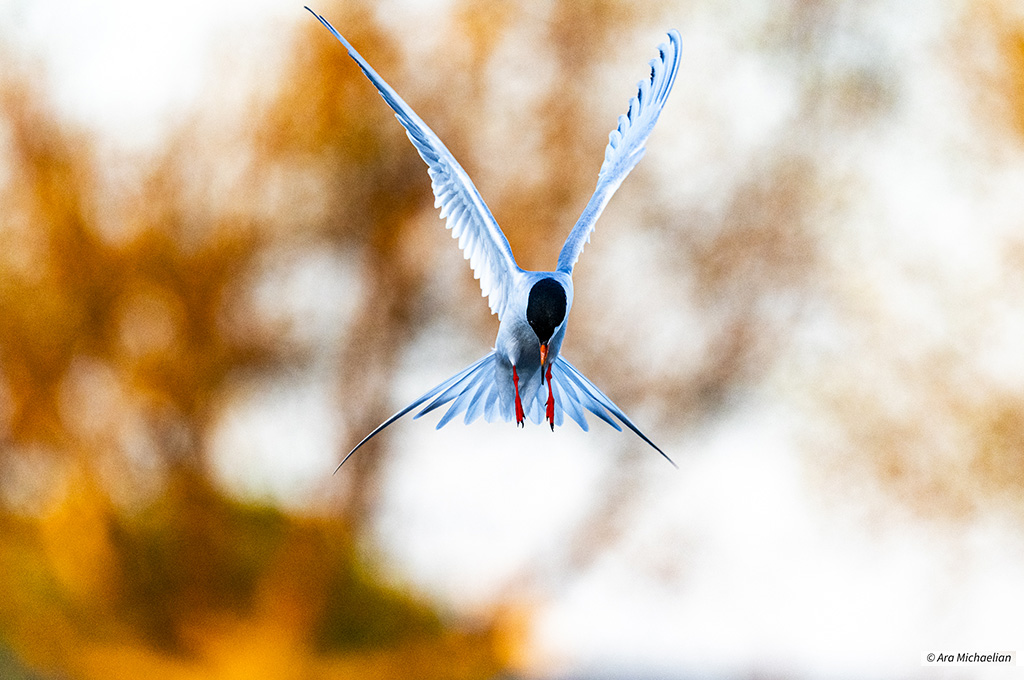
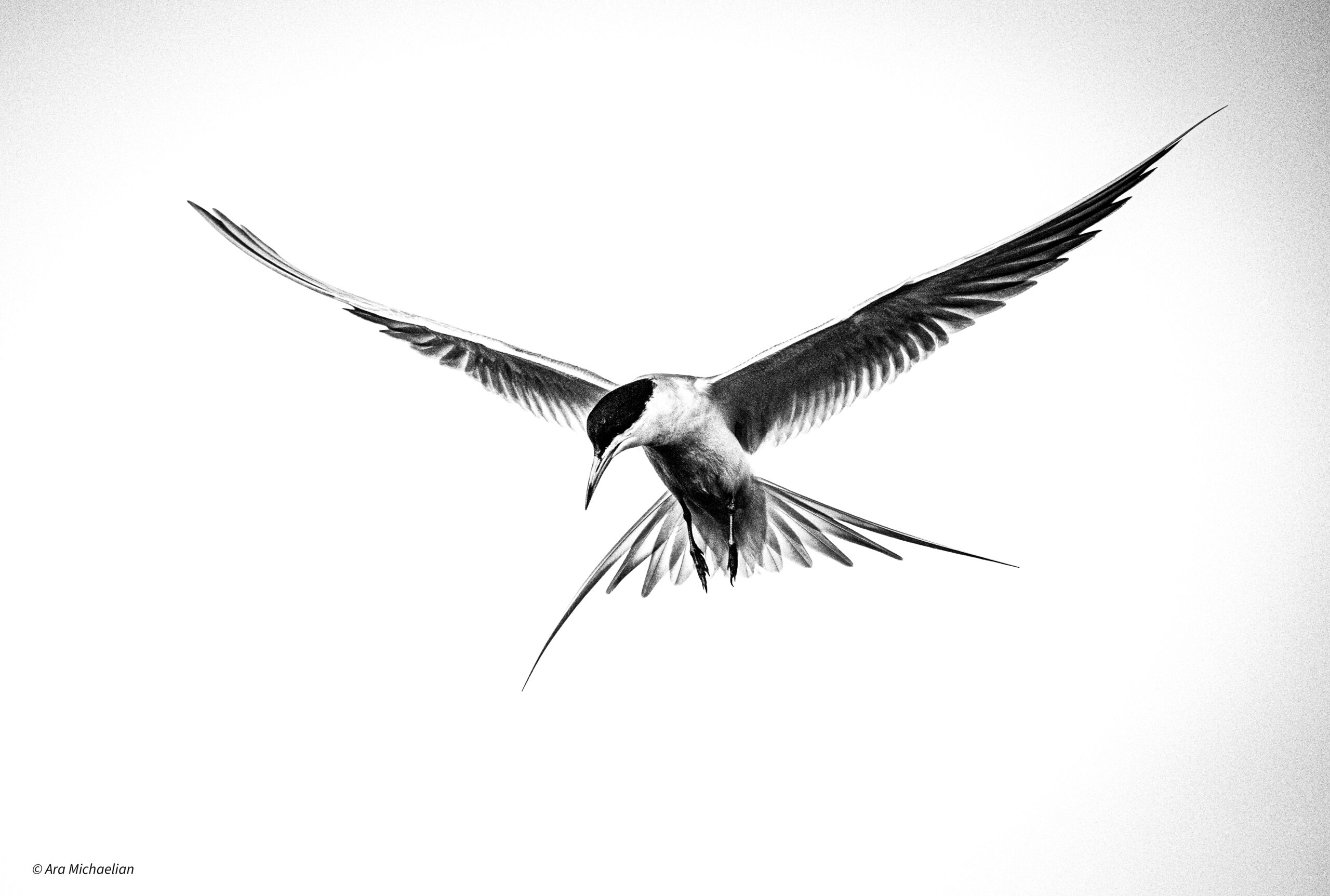
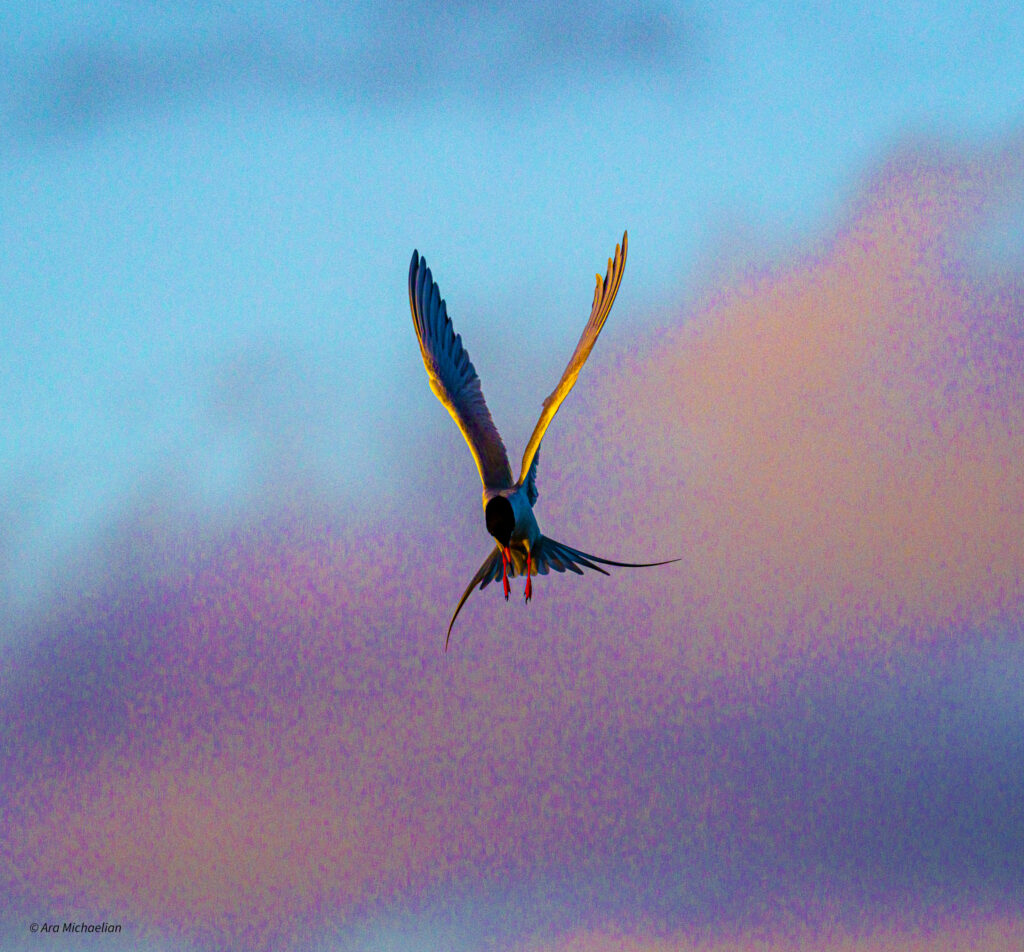
They would effortlessly circle above the pool looking for any movement below the surface. If they saw any signs of live sushi swimming below worth getting the chills for, they would instantly stretch their wings all the way up and shift into hi gear fluttering. In that almost stationary flight mode, they would only use their raised elbows and flutter with their wing tips that were stretched out to their limits, in order to catch as much air as possible for better control and accuracy.
Their feet would also drop down quickly from the tucked away position to offset the excessive vibrations and to stabilize them for an accurate aim. Their heads would arch down as far as it could go and their beaks would point towards their potential target. If the meal potential was not promising, they would casually glide off to look for next potential meal.
Their entire process of locating a potential meal, investigating it further, and diving or abandoning the hunt, would only take between five to ten seconds. But the photos I had in mind, would only exist during those few seconds before the dive, so nothing on this planet could come between my camera and them.
I would be laying down on my back at the bottom of the levy near the water’s edge, to locate potential candidates off camera, point my camera with 500mm lens weighing over eight pounds towards the general area and find them in the viewfinder, to begin with. Then try to focus and lock it on their tiny chest which is the only spot that’s focusable, and anticipate if the picture I have in mind is about to come true… all that in less than ten seconds at the most. It was like being in an iMax theater watching Arctic Terns fishing with 3D glasses, except it was real.
At this point, my heart was pounding in my chest to a point where I could almost hear it. I was holding my breath, my big nose was pressed flat against the back of the camera, and my right eye was glued to tiny viewfinder opening trying to capture an elegant beauty in time.
The blurry shapes and shades of them hovering like angels, would start to become more real. I could make out the position of their head and which direction their beak was pointing. I could see their chests, their hanging feet, and sometimes the tips of their extra long tail feathers, one on each side. Now, all I had to do is to anticipate the shots that are about to show up and click before I see them, otherwise those shots would definitely be missed.
These photos don’t do nearly enough justice for capturing the true and mind numbing flight skills of these Arctic Terns… that goes without saying. But what I tried to capture was to at least show their magical beauty, their unmatched grace and strength, frozen in thousands of a second time slice. To be more accurate, all Arctic Tern photos were taken using 1/6400 to 1/10000 shutter speeds.
To read more about them which I highly encourage, search… “Arctic Tern’s migration path”.
I hope you will enjoy viewing them and knowing more about their absolutely amazing “life style”.
Copyright © Ara Michaelian, MultiMediaAra, All Rights Reserved.